Living With

Accident or Injury Pain?

Start Your Recovery. Reduce pain. Move with confidence.

Heal Smarter. Move Better. Feel Like Yourself Again.

symbol of injury pain or accident recovery
Shawn Parsons

Patient

"The full package. This man has fixed more things with me than I realized were broken. I was “working myself to death”, when I first came here. He took me from a very bad state of health to being very energetic, active, and eliminated my anxiety. He has given me back my life!" -Shawn

Leonie Lamothe

Patient

"Michel Brosseau is an extremely knowlegeable and very competent chiropractor. Éliane the assistant/ receptionist is very welcoming and very accomodating. My husband and I have been patients at McLeod Street Chiropractic for a few hears now and we are very pleased with Michel Brosseau’s treatments and ongoing maintenance ." -Leonie

Michael Smith Dragon

Patient

"Dr Brosseau is kind and professional. He did a thorough assessment of me and sent me for x-rays. X-ray showed that I need surgery. Thus Dr Brosseau doesn't recommend Chiropractic treatment but that I should speak to my family doctor regarding my chronic problem. I appreciate Dr Brosseau giving me his honest professional opinion." -Michael

Jennie May Ellis

Patient

"I've been a patient of Dr. Brosseau's for a bit over a year and I'm so greatful. He has treated the osteoarthritis in my neck along with other spinal and hip alignment issues. It's been fantastic! I have recommended him to members of my family and they've had excellent results too. I go to him regularly now to keep everything in-line and working fine!" -Jennie

Shawn Cook

Patient

"Dr. Brosseau patiently took a digital scan and physical assessment and clearly defined the strategy for treatment. It was agreed that I would receive an adjustment that day and walked out of there feeling better. I returned weekly for subsequent visits. Dr Brosseau is very professional and extremely knowledgeable in many areas of care." -Shawn

Eva Lopéz

Patient

"Went in for a work injury and Dr. Brosseau gave me an adjustment and put my rib back in place. He had me fixed in one visit. Best chiropractic experience. His receptionist Ashley is professional and absolutely lovely." -Eva

Shayne Beausoleil

Patient

"Dr Brosseau cares about his patients and has helped me with many issues." -Shayne

Tammy-lynn Wilcox

Patient

"Dr. Brosseau and Ashley (receptionist) are both very professional, and personable. You are greeted with smiles and friendly conversation each visit. Dr. B makes you feel very comfortable with his knowledge-base, taking time to answer questions as they present. While also keeping you on your toes, by laughing (or shaking your head with a smirk) at his quirky jokes." -Tammy-lynn

Miss. Doll

Patient

"Friendly staff. If you have any kind of pain, the doctor will do his best to help relieve it. I’ve only had one adjustment and I feel the results already!!!" - Miss. Doll

Susanne Buott

Patient

"He is honest, dedicated, knowledgeable and professional with a witty sense of humor that brightens every visit. The receptionist is also very friendly and personable and the office has a warm, welcoming atmosphere. I drive all the way out from Chelmsford twice a week for my visits and it is definitely worth it!" -Susanne

96.5% Patient Satisfaction

happy patient after successful chiropractic session.
Smiling patient after successful treatment.
patient expressing satisfaction after effective pain management treatment.
content patient leaving clinic after receiving personalized care.
patient feeling relieved and satisfied after a successful therapy session.
Accident Pain Shouldn’t Decide How You Move, Work, Or Live;

Get Answers. Get Relief. Get Moving Again.

From sudden injury to daily discomfort, start with a proper assessment and a plan built for recovery.

Injury Pain Overview

Nearly two-thirds of Canadians experience a traumatic event, such as a car accident, that results in both physical injuries and emotional distress. At Mcleod Street Chiropractic, we are committed to alleviating pain caused by accidents and injuries through chiropractic care that effectively reduces inflammation, aids in healing, and restores mobility.

Types of Accident and Injury Pain Treatable With Chiropractic Care

Chiropractic care plays a crucial role in not only reducing recovery time but also minimizing long-term damage resulting from accident and injury trauma. Notably, research published in PubMed reveals that patients who consult chiropractors are 50% less likely to fill an opioid prescription, highlighting the effectiveness of chiropractic treatments in managing pain without reliance on medications.
Chiropractic treatments are particularly effective for a broad spectrum of injuries, providing significant relief from pain, reducing inflammation, and enhancing mobility.

These include:
  • Strains: Muscle or tendon injuries often resulting from overexertion.
  • Sprains: Injuries to ligaments around joints, commonly occurring in sports or falls.
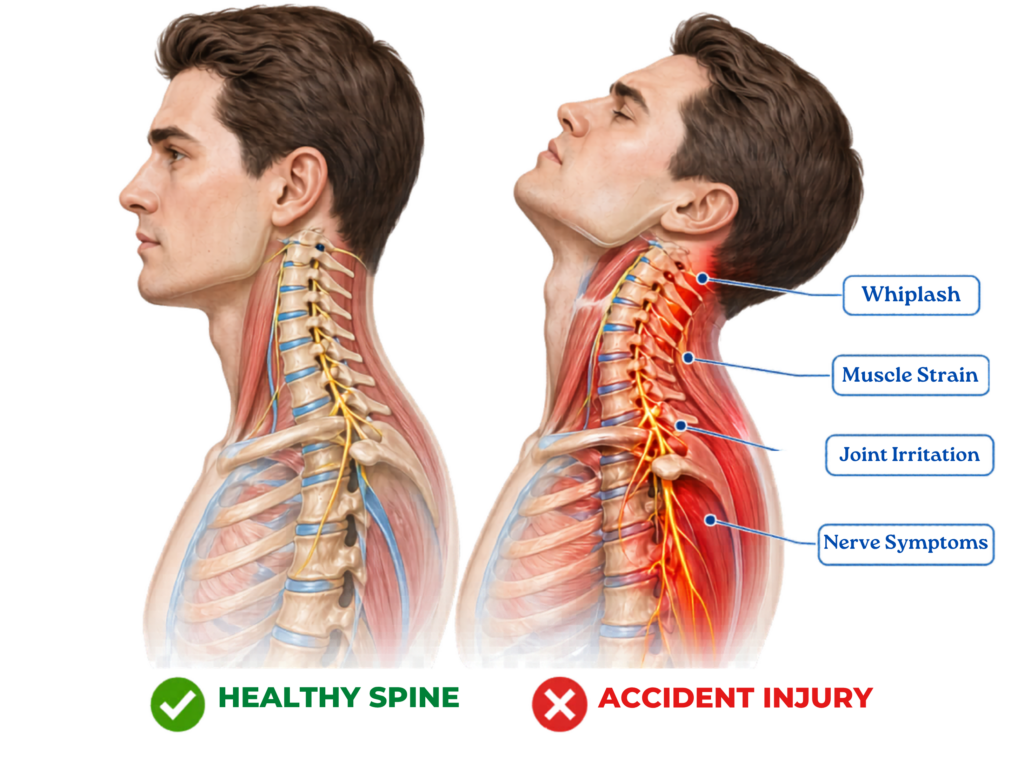
  • Whiplash: A neck injury from sudden, forceful neck movement, often seen in vehicle accidents.
  • Overuse Injuries: Damage from repetitive stress, such as tendonitis or stress fractures.
  • Restricted Mobility: Movement limitations due to injuries affecting the musculoskeletal system.
  • Headaches: Post-traumatic headaches that may persist long after the initial injury.
  • Disc Injuries: Herniated or bulging discs causing severe back and neck pain.
  • Joint Pain: Injuries to shoulders, elbows, and knees, often impacting daily activities.

Understanding Chronic Vs. Acute Injury Pain

Injury pain can show up quickly, build over time, or linger long after the original accident.

Common types of injury-related pain include:

  • Acute Pain: Pain that comes on quickly after an accident or injury — often sharp, intense, and directly connected to the event.
  • Subacute Pain: Pain that develops or persists after the initial injury, often lasting from a few weeks up to three months as the body continues to recover.
  • Chronic Pain: Ongoing discomfort that lasts beyond three months and can begin affecting movement, sleep, work, mood, and overall quality of life without the right care plan.

Common Causes of Accident and Injury Pain

Automobile accidents can place sudden force through the neck, back, shoulders, hips, joints, muscles, and nervous system — even when the crash seems minor at first.

The impact from a collision can contribute to conditions like whiplash, spinal injuries, soft tissue strain, joint irritation, nerve symptoms, and in more serious cases, fractures or concussion-related symptoms.

Pain may show up right away, but it can also build hours or days later as inflammation, muscle guarding, and restricted movement begin to set in.

Common signs may include:

  • Whiplash Symptoms: Sudden acceleration and deceleration can strain the neck, shoulders, and upper back, leading to stiffness, headaches, reduced range of motion, or pain that worsens over time.
  • Back Or Spinal Pain: The force of a crash can irritate spinal joints, discs, muscles, and ligaments, creating pain through the low back, mid-back, neck, hips, or pelvis.
  • Numbness Or Tingling: If nerves are irritated or compressed after impact, symptoms may travel into the arms, hands, legs, or feet.
  • Muscle Guarding: After a collision, the body may tighten muscles to protect injured areas, which can create spasms, stiffness, soreness, and restricted movement.
  • Headaches Or Dizziness: Head pain, dizziness, blurred vision, confusion, nausea, or symptoms after a head impact should be taken seriously and evaluated promptly.
  • A Proper Assessment Matters: Because accident-related pain can come from joints, muscles, ligaments, discs, nerves, or deeper injury, a focused evaluation helps identify what was affected and what care may help you recover properly.

Sports injuries can happen during training, competition, recreation, or even casual physical activity — especially when the body is overloaded, twisted, hit, or pushed past its current capacity.

These injuries may include sprains, strains, joint irritation, muscle tears, tendon stress, ligament injuries, impact trauma, or movement-related pain that builds over time.

Whether the injury happens suddenly or develops gradually, the right assessment helps identify what was affected and how your body may be compensating.

Common signs may include:

  • Sprains And Strains: Ligaments, muscles, or tendons can become overstretched or irritated during sudden stops, twists, falls, collisions, or awkward movements.
  • Joint Pain Or Instability: Shoulders, knees, ankles, hips, wrists, and spinal joints can become painful, stiff, unstable, or difficult to trust during movement.
  • Reduced Range Of Motion: Injured areas may feel tight, guarded, swollen, or restricted, making it harder to move normally, train, lift, run, turn, or play.
  • Pain That Returns With Activity: Symptoms that keep coming back during exercise may indicate the body is still compensating or that the injured area has not fully recovered.
  • Muscle Guarding And Compensation: After an injury, nearby muscles may tighten to protect the area, which can create new strain patterns in the back, hips, shoulders, knees, or neck.
  • A Proper Assessment Matters: Because sports injuries can involve muscles, joints, ligaments, tendons, nerves, or movement mechanics, a focused evaluation helps identify what needs support so you can recover more confidently.

Falls can create sudden force through the spine, hips, shoulders, wrists, knees, ankles, and head — sometimes causing pain that lasts long after the initial impact.

A fall may result in broken bones, back injuries, joint dislocations, sprains, strains, bruising, soft tissue trauma, nerve irritation, or lingering movement problems.

Even when nothing feels “broken,” the body may begin guarding the injured area, creating stiffness, compensation, and pain that can get worse if it is not properly assessed.

Common signs may include:

  • Back Or Neck Pain: The impact from a fall can irritate spinal joints, discs, muscles, ligaments, or nerves, leading to stiffness, soreness, headaches, or restricted movement.
  • Joint Pain Or Dislocation: Shoulders, hips, knees, wrists, and ankles can be strained, jammed, twisted, or dislocated during a fall, making movement painful or unstable.
  • Swelling Or Bruising: Visible swelling, bruising, redness, tenderness, or changes around the injury site may indicate deeper tissue, joint, or bone trauma.
  • Numbness Or Tingling: If nerves are irritated after impact, symptoms may travel into the arms, hands, legs, or feet and should be evaluated.
  • Head Pain Or Dizziness: Headache, dizziness, blurred vision, confusion, nausea, or symptoms after hitting your head should be treated seriously and assessed promptly.
  • A Proper Assessment Matters: Because fall-related pain can involve bones, joints, muscles, ligaments, nerves, balance, or compensation patterns, a focused evaluation helps identify what was affected and what care may help you recover properly.

Repetitive strain injuries can develop when the same muscles, joints, tendons, or nerves are stressed again and again without enough recovery.

These injuries often build gradually from repeated motions, awkward positions, poor ergonomics, overuse, gripping, typing, lifting, tool use, or long hours in the same posture.

Repetitive strain can lead to conditions like carpal tunnel syndrome, tendonitis, muscle strain, joint irritation, nerve compression, and ongoing pain that interferes with work, movement, and daily life.

Common signs may include:

  • Aching Or Burning Pain: Pain may build slowly through the wrists, hands, elbows, shoulders, neck, back, hips, or knees after repeated use or prolonged positioning.
  • Tingling Or Numbness: Repetitive stress can irritate or compress nerves, leading to pins and needles, numbness, weakness, or altered sensation in the hands, arms, legs, or feet.
  • Tendon Or Joint Irritation: Tendons and joints can become inflamed or overloaded, creating stiffness, tenderness, swelling, or pain with gripping, lifting, reaching, bending, or repetitive movement.
  • Reduced Strength Or Control: You may notice weaker grip strength, clumsiness, fatigue, difficulty lifting, or reduced control in the affected area.
  • Symptoms That Return With Activity: Pain that improves with rest but comes back during work, exercise, typing, lifting, or repeated tasks may be a sign the tissues have not fully recovered.
  • A Proper Assessment Matters: Because repetitive strain can involve muscles, tendons, joints, nerves, posture, workplace setup, or movement mechanics, a focused evaluation helps identify what is being overloaded and what care may help.

Work-related injuries can develop from poor ergonomics, improper lifting techniques, repetitive tasks, awkward positions, or long hours of physical strain.

These injuries may happen suddenly — like lifting something the wrong way — or gradually over time as the same joints, muscles, tendons, and nerves are stressed again and again.

Whether your work is physical, desk-based, repetitive, or a mix of everything, the right assessment helps identify what your body is compensating for and what needs support.

Common signs may include:

  • Back Or Neck Pain: Poor lifting mechanics, long sitting, awkward posture, or repetitive strain can irritate the spine and create pain through the neck, mid-back, low back, hips, or shoulders.
  • Wrist, Elbow, Or Shoulder Strain: Typing, gripping, reaching, lifting, tool use, or repeated arm movements can contribute to tendon irritation, joint stress, or nerve-related symptoms.
  • Numbness Or Tingling: Repeated pressure, poor workstation setup, or nerve compression can create tingling, burning, weakness, or altered sensation in the arms, hands, legs, or feet.
  • Stiffness And Reduced Mobility: Long hours in one position or repeated physical stress can make muscles and joints feel tight, restricted, sore, or harder to move comfortably.
  • Pain That Builds During The Workday: Symptoms that worsen as the day goes on may be a sign that your setup, workload, posture, lifting technique, or movement patterns are overloading your body.
  • A Proper Assessment Matters: Because work-related injuries can involve joints, muscles, tendons, nerves, posture, ergonomics, or lifting mechanics, a focused evaluation helps identify what is being overloaded and what care may help you recover.

At Mcleod Street Chiropractic, we help people move better, feel stronger, and enjoy life with less pain.

Risk Factors

Accidents can happen quickly — but certain risk factors can make injuries more likely and recovery more difficult.

Slips, falls, sudden impacts, awkward movements, and everyday strain can all create pain that affects how you move, work, sleep, and function.

Understanding these risk factors can help you protect your body, reduce the chance of re-injury, and take smarter steps toward a smoother recovery if an accident does happen.

Poor
Nutrition

Accidents or injuries can cause numbness and tingling by damaging nerves and tissues, impairing sensation and causing pain over time.

Lack of Physical
Fitness

Accidents or injuries can lead to pain by damaging nerves, muscles, or tissues, affecting movement and sensation over time.

Bad Posture and Ergonomics

Bad posture and poor ergonomics can lead to pain by straining muscles and joints, compressing nerves, and reducing circulation, causing discomfort.

Insufficient Sleep

Insufficient sleep can lead to pain by disrupting the body's healing processes, impairing nerve function, and hindering muscle recovery over time.

Stress and Mental Health

Stress and poor mental health can lead to pain by increasing muscle tension, affecting nerve function, and amplifying discomfort over time.

Age-Related Factors

Age-related factors can contribute to pain as nerve function naturally declines, and joint or circulation issues become more common with aging.

Start Your Injury Recovery Plan

Calm the pain. Restore movement. Get back to life with confidence.

3,000,00 0
Cases of workplace injuries and accidents reported in 2022
50,000,00 0
North Americans experience chronic pain, highlighting the effects of injuries
0 %
Of people reported substantial pain relief and satisfaction with chiropractic outcomes
0 %
Fewer people under chiropractic care will fill an opioid prescription to manage their pain

When To Take Action For Accident & Injury Pain


After an accident or injury, pain is your body’s signal that something may need attention.

While all pain deserves care, some symptoms can mean your body needs help sooner. Seek immediate medical attention if you experience:

  • Severe Or Persistent Pain:
    Pain that does not improve with standard care, gets worse over time, or feels stronger than expected after an accident or injury.
  • Functional Impairment:
    Difficulty walking, lifting, turning, bending, sleeping, working, or performing everyday tasks because the affected area is too painful or restricted.
  • Visible Changes:
    Swelling, redness, bruising, deformity, or noticeable changes around the injury site that may indicate deeper tissue, joint, or structural trauma.
  • Neurological Symptoms:
    Numbness, tingling, weakness, radiating pain, or changes in sensation that may suggest nerve irritation, compression, or injury.

Headache/head pain after an accident should always be considered serious. Seek medical care immediately if you experience severe head pain or blurred vision following an accident or head injury.

It's Easy To Get Started

Injury Assessment

Start with a focused evaluation to understand what was affected by the accident or injury — including painful areas, range of motion, joint function, muscle tension, nerve symptoms, and how your body is compensating.

Personalized Recovery Strategy

Based on your assessment, we’ll create a care plan focused on reducing pain, restoring movement, supporting injured tissues, and addressing the underlying factors slowing down your recovery.

Targeted Injury Care

Begin chiropractic care and supportive recommendations designed to calm irritation, reduce stiffness, improve mobility, and help your body recover with better function.

Get Back To Moving Confidently

Get back to walking, working, sleeping, lifting, driving, and living with more confidence — with a plan that supports recovery and long-term movement.

Ready To Start Your Injury Recovery Plan?

Get answers. Reduce pain. Move with more confidence after an accident or injury.

Reduce your risk, protect your body, and recover stronger when life happens.

Tip 1: Prevent Sports Injuries

Smart preparation can help reduce the risk of sports-related injuries, strains, falls, and preventable setbacks.

Use these habits to help protect your body before, during, and after activity:

  • Dynamic Warm-Ups: Begin each activity with dynamic movement to increase blood flow, prepare your muscles, and help your joints move more safely.
  • Core Strengthening: Regularly include exercises that build core strength, improve stability, and help reduce the risk of falls, strains, and poor movement patterns.
  • Technique Training: Work with a coach, trainer, or qualified professional to make sure your form is helping your body — not adding unnecessary stress.
  • Appropriate Equipment: Use gear that fits your size, activity, and level of demand, including proper footwear, protective padding, braces, or custom equipment when needed.
  • Adequate Rest: Build rest days into your schedule so your muscles, joints, and nervous system have time to recover, adapt, and get stronger.
  • Injury Rehabilitation: Follow through with recommended rehab or care plans after an injury to reduce the risk of lingering symptoms, compensation, or re-injury.

Reducing fall risks can help protect your joints, muscles, spine, and overall mobility — especially in daily spaces you use all the time.

Use these simple safety habits to lower your risk of slips, trips, and falls:

  • Environmental Awareness: Regularly check your home, workplace, and walking areas for hazards like loose rugs, slippery floors, cluttered walkways, uneven surfaces, and poor lighting.
  • Balance Exercises: Include balance-building activities such as Tai Chi, yoga, single-leg balance drills, or simple stability exercises to help improve coordination and control.
  • Proper Footwear: Wear shoes with good traction, proper support, and a secure fit to help maintain balance and reduce slipping, especially in wet, icy, or uneven conditions.
  • Home Safety: Install handrails or grab bars where needed, keep walkways clear, secure loose cords, and use non-slip mats in areas like bathrooms, kitchens, stairs, and entryways.

Better lifting mechanics can help protect your back, shoulders, hips, and joints from unnecessary strain.

Use these safer lifting and carrying habits to reduce your risk of injury:

  • Set Your Base First: Stand with your feet about shoulder-width apart, with one foot slightly in front of the other, so your body feels balanced before you lift.
  • Use Proper Lifting Technique: Bend through your knees and hips, keep the load close to your body, and maintain a straight back and neck with your chest up and shoulders back.
  • Lift And Lower Gradually: Use your legs to lift slowly, avoid twisting or jerking, and use the same controlled squatting motion when setting the object back down.
  • Use Tools When Needed: Use lifting aids like a dolly, cart, lifting straps, or a second person when the object is too heavy, awkward, or difficult to control safely.
  • Practice Mindful Movement: Pay attention to the weight, shape, and position of each object. Use safe technique even with lighter loads so your body builds better movement habits.

Better overall fitness can help your body handle daily stress, reduce injury risk, and recover more effectively when accidents happen.

Build a stronger, more resilient body with these habits:

  • Strength Training: Include exercises that build strength through your core, legs, hips, back, and shoulders so your body has better support during daily movement.
  • Cardiovascular Activity: Add regular movement such as walking, cycling, swimming, or low-impact exercise to support circulation, endurance, energy, and recovery.
  • Flexibility And Mobility: Use gentle stretching and mobility work to keep your joints moving well, reduce stiffness, and help your body adapt to sudden movements more safely.
  • Balance And Coordination: Practice balance-focused movements to improve control, reaction time, and stability — especially when walking, stepping, lifting, or changing direction.
  • Consistent Recovery: Give your body enough rest, hydration, and recovery time so your muscles, joints, and nervous system can repair and perform better.

Mental and emotional well-being can affect how your body moves, recovers, and responds to physical stress.

Support your mind and body with habits that reduce tension, improve awareness, and lower the risk of preventable injuries:

  • Manage Stress Regularly: Use simple practices like deep breathing, mindfulness, meditation, walking, or quiet time to help reduce muscle tension, distraction, and stress-related strain.
  • Prioritize Quality Sleep: Good sleep helps your body repair, improves focus, supports coordination, and can reduce the risk of careless movement or accident-related mistakes.
  • Fuel Your Body Well: Balanced nutrition and proper hydration support energy, alertness, muscle function, recovery, and overall resilience after physical stress.
  • Stay Present While Moving: Pay attention when walking, lifting, exercising, driving, or navigating busy spaces so your body can react better and avoid preventable strain or injury.

Gain Your Elite Advantage

Actionable Tips And Insights For Winning Your Day