Heal properly. Move easier. Feel like yourself again.


"The full package. This man has fixed more things with me than I realized were broken. I was “working myself to death”, when I first came here. He took me from a very bad state of health to being very energetic, active, and eliminated my anxiety. He has given me back my life!" -Shawn
Patient
"Michel Brosseau is an extremely knowlegeable and very competent chiropractor. Éliane the assistant/ receptionist is very welcoming and very accomodating. My husband and I have been patients at McLeod Street Chiropractic for a few hears now and we are very pleased with Michel Brosseau’s treatments and ongoing maintenance ." -Leonie
Patient
"Dr Brosseau is kind and professional. He did a thorough assessment of me and sent me for x-rays. X-ray showed that I need surgery. Thus Dr Brosseau doesn't recommend Chiropractic treatment but that I should speak to my family doctor regarding my chronic problem. I appreciate Dr Brosseau giving me his honest professional opinion." -Michael
Patient
"I've been a patient of Dr. Brosseau's for a bit over a year and I'm so greatful. He has treated the osteoarthritis in my neck along with other spinal and hip alignment issues. It's been fantastic! I have recommended him to members of my family and they've had excellent results too. I go to him regularly now to keep everything in-line and working fine!" -Jennie
Patient
"Dr. Brosseau patiently took a digital scan and physical assessment and clearly defined the strategy for treatment. It was agreed that I would receive an adjustment that day and walked out of there feeling better. I returned weekly for subsequent visits. Dr Brosseau is very professional and extremely knowledgeable in many areas of care." -Shawn
Patient
"Went in for a work injury and Dr. Brosseau gave me an adjustment and put my rib back in place. He had me fixed in one visit. Best chiropractic experience. His receptionist Ashley is professional and absolutely lovely." -Eva
Patient
"Dr Brosseau cares about his patients and has helped me with many issues." -Shayne
Patient
"Dr. Brosseau and Ashley (receptionist) are both very professional, and personable. You are greeted with smiles and friendly conversation each visit. Dr. B makes you feel very comfortable with his knowledge-base, taking time to answer questions as they present. While also keeping you on your toes, by laughing (or shaking your head with a smirk) at his quirky jokes." -Tammy-lynn
Patient
"Friendly staff. If you have any kind of pain, the doctor will do his best to help relieve it. I’ve only had one adjustment and I feel the results already!!!" - Miss. Doll
Patient
"He is honest, dedicated, knowledgeable and professional with a witty sense of humor that brightens every visit. The receptionist is also very friendly and personable and the office has a warm, welcoming atmosphere. I drive all the way out from Chelmsford twice a week for my visits and it is definitely worth it!" -Susanne
Injury pain can show up quickly, build over time, or linger long after the original accident.
Common types of injury-related pain include:
Automobile accidents can place sudden force through the neck, back, shoulders, hips, joints, muscles, and nervous system — even when the crash seems minor at first.
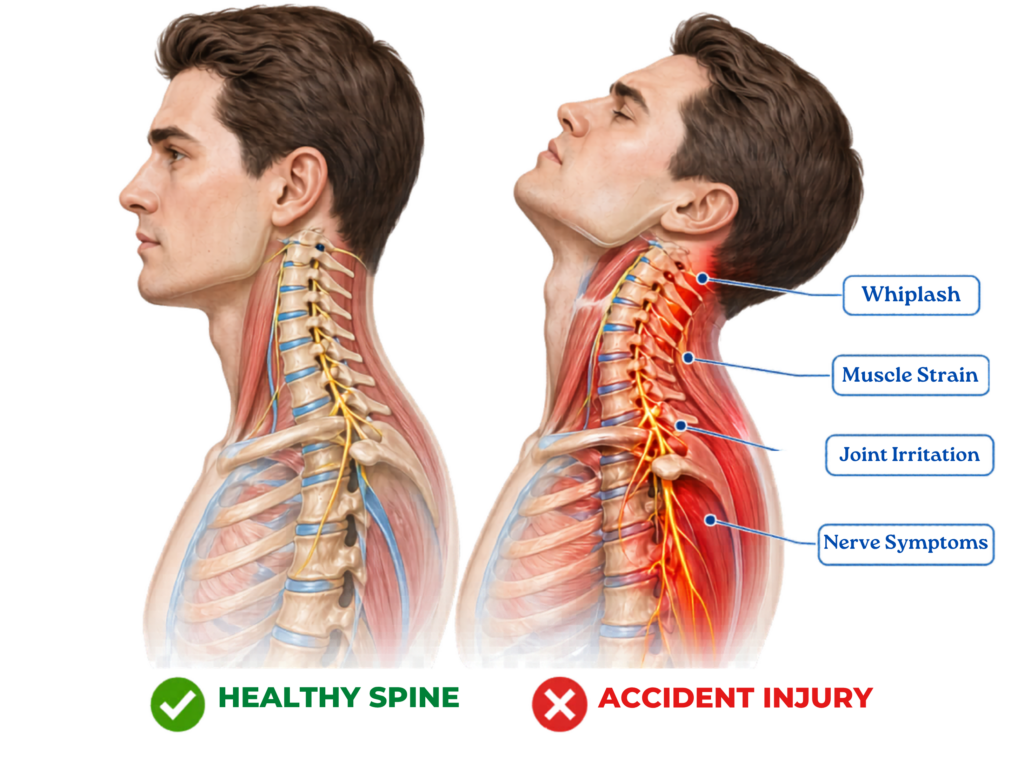
The impact from a collision can contribute to conditions like whiplash, spinal injuries, soft tissue strain, joint irritation, nerve symptoms, and in more serious cases, fractures or concussion-related symptoms.
Pain may show up right away, but it can also build hours or days later as inflammation, muscle guarding, and restricted movement begin to set in.
Common signs may include:
Sports injuries can happen during training, competition, recreation, or even casual physical activity — especially when the body is overloaded, twisted, hit, or pushed past its current capacity.
These injuries may include sprains, strains, joint irritation, muscle tears, tendon stress, ligament injuries, impact trauma, or movement-related pain that builds over time.
Whether the injury happens suddenly or develops gradually, the right assessment helps identify what was affected and how your body may be compensating.
Common signs may include:
Falls can create sudden force through the spine, hips, shoulders, wrists, knees, ankles, and head — sometimes causing pain that lasts long after the initial impact.
A fall may result in broken bones, back injuries, joint dislocations, sprains, strains, bruising, soft tissue trauma, nerve irritation, or lingering movement problems.
Even when nothing feels “broken,” the body may begin guarding the injured area, creating stiffness, compensation, and pain that can get worse if it is not properly assessed.
Common signs may include:
Repetitive strain injuries can develop when the same muscles, joints, tendons, or nerves are stressed again and again without enough recovery.
These injuries often build gradually from repeated motions, awkward positions, poor ergonomics, overuse, gripping, typing, lifting, tool use, or long hours in the same posture.
Repetitive strain can lead to conditions like carpal tunnel syndrome, tendonitis, muscle strain, joint irritation, nerve compression, and ongoing pain that interferes with work, movement, and daily life.
Common signs may include:
Work-related injuries can develop from poor ergonomics, improper lifting techniques, repetitive tasks, awkward positions, or long hours of physical strain.
These injuries may happen suddenly — like lifting something the wrong way — or gradually over time as the same joints, muscles, tendons, and nerves are stressed again and again.
Whether your work is physical, desk-based, repetitive, or a mix of everything, the right assessment helps identify what your body is compensating for and what needs support.
Common signs may include:
At McLeod Street Chiropractic, we help people move better, feel stronger, and enjoy life with less pain.
Accidents can happen quickly — but certain risk factors can make injuries more likely and recovery more difficult.
Slips, falls, sudden impacts, awkward movements, and everyday strain can all create pain that affects how you move, work, sleep, and function. Understanding these risk factors can help you protect your body, reduce the chance of re-injury, and take smarter steps toward a smoother, stronger recovery.
Accidents or injuries can cause numbness and tingling by damaging nerves and tissues, impairing sensation and causing pain over time.
Accidents or injuries can lead to pain by damaging nerves, muscles, or tissues, affecting movement and sensation over time.
Bad posture and poor ergonomics can lead to pain by straining muscles and joints, compressing nerves, and reducing circulation, causing discomfort.
Insufficient sleep can lead to pain by disrupting the body's healing processes, impairing nerve function, and hindering muscle recovery over time.
Stress and poor mental health can lead to pain by increasing muscle tension, affecting nerve function, and amplifying discomfort over time.
Age-related factors can contribute to pain as nerve function naturally declines, and joint or circulation issues become more common with aging.
Calm the pain. Restore movement. Get back to life with confidence.
After an accident or injury, pain is your body’s signal that something may need attention.
While all pain deserves care, some symptoms can mean your body needs help sooner. Seek immediate medical attention if you experience any of the following.
Severe Or Persistent Pain: Pain that does not improve with standard care, gets worse over time, or feels stronger than expected after an accident or injury.
Functional Impairment: Difficulty walking, lifting, turning, bending, sleeping, working, or performing everyday tasks because the affected area is too painful or restricted.
Visible Changes: Swelling, redness, bruising, deformity, or noticeable changes around the injury site that may indicate deeper tissue, joint, or structural trauma.
Neurological Symptoms: Numbness, tingling, weakness, radiating pain, or changes in sensation that may suggest nerve irritation, compression, or injury.
Headache or head pain after an accident should always be taken seriously. Seek medical care immediately if severe head pain or blurred vision follows an accident or head injury.
A focused, supportive process designed to help you understand what was affected by the accident or injury, reduce unnecessary pain and stiffness, and move toward better movement, stronger recovery, and more confidence.
Start with a focused injury evaluation designed to understand what was affected by the accident — including painful areas, range of motion, joint function, muscle tension, nerve symptoms, compensation patterns, and how your body is protecting itself.
Based on your assessment, Dr. Brosseau will recommend a personalized care plan focused on what your body actually needs — not just pushing through pain and hoping it settles on its own.
Begin targeted chiropractic care and supportive recommendations designed to calm irritation, reduce stiffness, restore mobility, support injured tissues, and help your body recover with better function.
As pain, stiffness, and movement restrictions improve, the goal is simple: better recovery, easier movement, and more confidence in your work, sleep, driving, walking, lifting, routines, and daily life.
Take the next step toward calmer pain, easier movement, better function, and getting back to life with confidence.
Reduce your risk, protect your body, and recover stronger when life happens.
Smart preparation can help reduce the risk of sports-related injuries, strains, falls, and preventable setbacks.
Use these habits to help protect your body before, during, and after activity:
Reducing fall risks can help protect your joints, muscles, spine, and overall mobility — especially in daily spaces you use all the time.
Use these simple safety habits to lower your risk of slips, trips, and falls:
Better lifting mechanics can help protect your back, shoulders, hips, and joints from unnecessary strain.
Use these safer lifting and carrying habits to reduce your risk of injury:
Better overall fitness can help your body handle daily stress, reduce injury risk, and recover more effectively when accidents happen.
Build a stronger, more resilient body with these habits:
Mental and emotional well-being can affect how your body moves, recovers, and responds to physical stress.
Support your mind and body with habits that reduce tension, improve awareness, and lower the risk of preventable injuries:
Actionable Tips And Insights For Winning Your Day
Lorem ipsum dolor sit amet consectetuer adipiscing elit. Aenean commodo ligula eget…
Shawn ParsonsPatient