Living With

Neck Pain?

Free Your Neck. Move easier. Function better. Live better.

Get Relief. Gain More. Move better. Function better. Live better.

person performing gentle neck stretches to ease tension and discomfort
Shawn Parsons

Patient

"The full package. This man has fixed more things with me than I realized were broken. I was “working myself to death”, when I first came here. He took me from a very bad state of health to being very energetic, active, and eliminated my anxiety. He has given me back my life!" -Shawn

Leonie Lamothe

Patient

"Michel Brosseau is an extremely knowlegeable and very competent chiropractor. Éliane the assistant/ receptionist is very welcoming and very accomodating. My husband and I have been patients at McLeod Street Chiropractic for a few hears now and we are very pleased with Michel Brosseau’s treatments and ongoing maintenance ." -Leonie

Michael Smith Dragon

Patient

"Dr Brosseau is kind and professional. He did a thorough assessment of me and sent me for x-rays. X-ray showed that I need surgery. Thus Dr Brosseau doesn't recommend Chiropractic treatment but that I should speak to my family doctor regarding my chronic problem. I appreciate Dr Brosseau giving me his honest professional opinion." -Michael

Jennie May Ellis

Patient

"I've been a patient of Dr. Brosseau's for a bit over a year and I'm so greatful. He has treated the osteoarthritis in my neck along with other spinal and hip alignment issues. It's been fantastic! I have recommended him to members of my family and they've had excellent results too. I go to him regularly now to keep everything in-line and working fine!" -Jennie

Shawn Cook

Patient

"Dr. Brosseau patiently took a digital scan and physical assessment and clearly defined the strategy for treatment. It was agreed that I would receive an adjustment that day and walked out of there feeling better. I returned weekly for subsequent visits. Dr Brosseau is very professional and extremely knowledgeable in many areas of care." -Shawn

Eva Lopéz

Patient

"Went in for a work injury and Dr. Brosseau gave me an adjustment and put my rib back in place. He had me fixed in one visit. Best chiropractic experience. His receptionist Ashley is professional and absolutely lovely." -Eva

Shayne Beausoleil

Patient

"Dr Brosseau cares about his patients and has helped me with many issues." -Shayne

Tammy-lynn Wilcox

Patient

"Dr. Brosseau and Ashley (receptionist) are both very professional, and personable. You are greeted with smiles and friendly conversation each visit. Dr. B makes you feel very comfortable with his knowledge-base, taking time to answer questions as they present. While also keeping you on your toes, by laughing (or shaking your head with a smirk) at his quirky jokes." -Tammy-lynn

Miss. Doll

Patient

"Friendly staff. If you have any kind of pain, the doctor will do his best to help relieve it. I’ve only had one adjustment and I feel the results already!!!" - Miss. Doll

Susanne Buott

Patient

"He is honest, dedicated, knowledgeable and professional with a witty sense of humor that brightens every visit. The receptionist is also very friendly and personable and the office has a warm, welcoming atmosphere. I drive all the way out from Chelmsford twice a week for my visits and it is definitely worth it!" -Susanne

96.5% Patient Satisfaction

happy patient after successful chiropractic session.
Smiling patient after successful treatment.
patient expressing satisfaction after effective pain management treatment.
content patient leaving clinic after receiving personalized care.
patient feeling relieved and satisfied after a successful therapy session.

Get Fast-Acting Neck Pain Relief in Greater Sudbury, ON

Feel Better. Function Better. Live Better!

Move easier, reduce pain, and get back to the life you want to live.

Neck Pain Overview

Did you know 1 in 3 people experience neck pain at least once a year? Dr. Michel Brosseau has seen neck pain that’s left untreated, eventually leading to increases in its frequency and intensity. Our approach is designed for fast relief that lasts to help people get back to enjoying life without pain.

Neck Pain Feels Like

  • Difficulty moving your head
  • Muscle spasms or tension
  • Strain that leads to frequent headaches
  • Pain that intensifies during prolonged positions, like driving or using devices

Stages of Neck Pain

Pain varies by duration and impact:

  • Acute Neck Pain: Sudden, lasting a few days to weeks.
  • Subacute Neck Pain: Persistent, lasting up to 12 weeks.
  • Chronic Neck Pain: Ongoing, altering daily life, lasting beyond 12 weeks.

Common Causes of Neck Pain

Dr. B addresses all stages of neck pain and its causes using personalized treatment plans focusing on long-term relief, not just temporary fixes. Some of the most common causes of neck pain include:

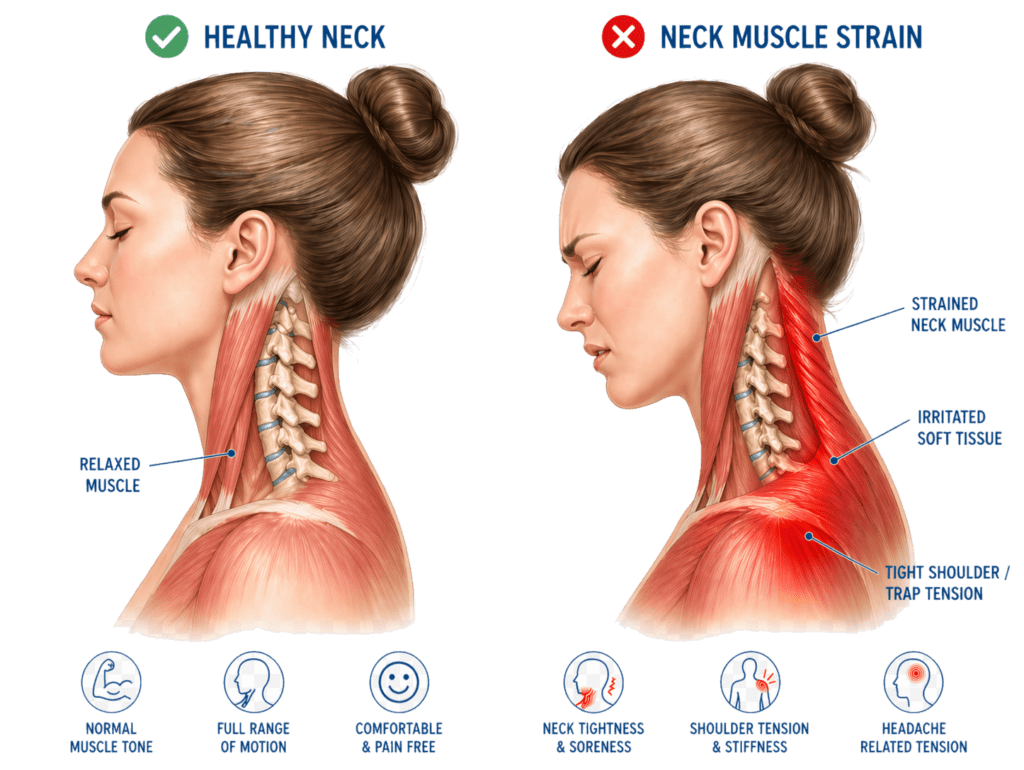
Muscle strains are one of the most common causes of neck pain, especially when the neck and shoulders are overloaded by posture, stress, awkward movement, or repetitive strain.

A strain can happen suddenly — like turning your head too quickly, sleeping awkwardly, or lifting with poor form — or it can build gradually from long hours at a desk, phone use, driving, or poor ergonomics.

When the muscles around the neck become irritated, overstretched, or overworked, they may tighten to protect the area. That can create stiffness, soreness, headaches, shoulder tension, and reduced range of motion.

Common signs may include:

  • Neck Tightness Or Soreness: Strained muscles can make the neck feel stiff, tender, achy, or difficult to move comfortably.
  • Pain With Turning Or Looking Down: Symptoms may feel worse when checking blind spots, looking down at a phone, working at a computer, or holding one position too long.
  • Shoulder And Upper Back Tension: Neck strains often affect the surrounding muscles, creating tightness through the shoulders, traps, upper back, and base of the skull.
  • Headache Pressure: Tension through the neck and base of the skull can contribute to headache pressure, especially after long periods of sitting, stress, or screen use.
  • Muscle Guarding: The body may tighten nearby muscles to protect the irritated area, which can make movement feel more restricted and uncomfortable.
  • A Proper Assessment Matters: Because neck pain can come from muscles, joints, discs, nerves, posture, stress, or injury, a focused evaluation helps identify what is actually driving the pain and what care may help.

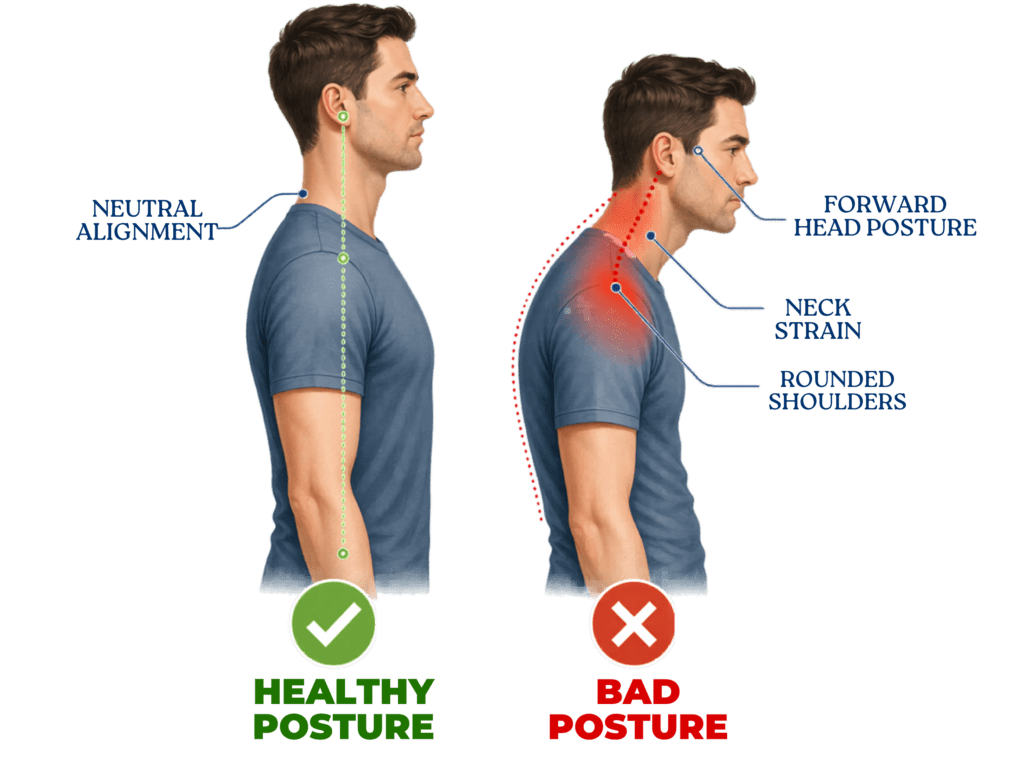
Poor posture is one of the biggest contributors to neck pain, especially for people who spend long hours sitting, working at a desk, driving, or looking down at phones and screens.

When your head drifts forward, your shoulders round, or your upper back collapses, the muscles and joints in your neck have to work harder to hold everything up.

Over time, that added strain can create tension, stiffness, headaches, reduced mobility, and recurring neck pain that keeps coming back.

Common posture-related issues may include:

  • Forward Head Posture: When the head sits too far forward, the neck and upper back have to carry more load, which can increase tension through the shoulders, traps, and base of the skull.
  • Desk And Screen Strain: Long hours at a computer, poor monitor height, unsupported sitting, or looking down at a laptop can slowly overload the neck and upper back.
  • Smartphone Neck: Looking down at a phone for long periods can place repeated stress through the neck, shoulders, upper back, and surrounding muscles.
  • Rounded Shoulders: Rounded shoulders can pull the upper body forward, tighten the chest, weaken postural support, and create more strain through the neck and shoulder area.
  • Headaches And Upper Back Tension: Poor posture can contribute to tension at the base of the skull, pressure through the temples, and tightness through the upper back and shoulders.
  • A Proper Assessment Matters: At McLeod Street Chiropractic, we can assess your posture, spinal movement, muscle tension, and daily habits to help identify what may be contributing to your neck pain and what corrective strategies may help.

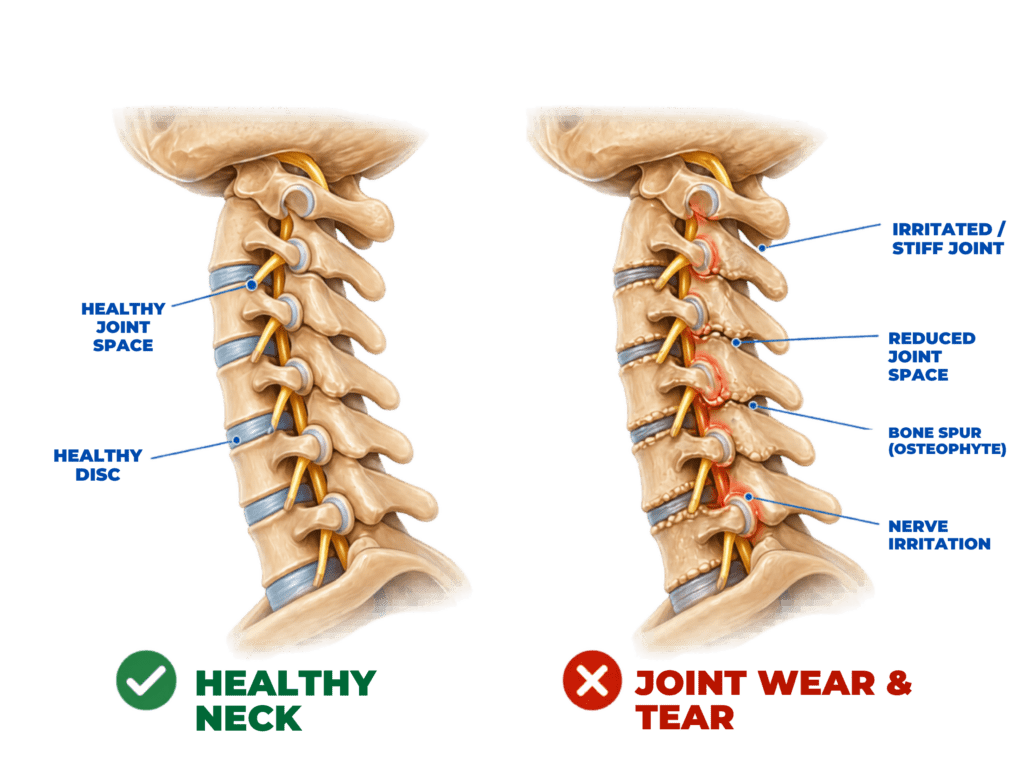
Joint wear and tear can develop gradually as the neck responds to aging, overuse, sports, repetitive stress, posture habits, and years of daily movement.

Over time, the joints in the neck may become irritated, stiff, compressed, or less mobile. This can place extra stress on surrounding muscles, discs, nerves, and soft tissues.

For people who stay active, work long hours, play sports, or spend time looking down at devices, these small stresses can compound and contribute to recurring neck pain.

Common signs may include:

  • Neck Stiffness: Wear and tear can make the neck feel tight, restricted, or harder to move comfortably — especially first thing in the morning or after sitting for long periods.
  • Reduced Range Of Motion: Turning your head, checking blind spots, looking up, or rotating the neck may feel more limited when joints are irritated or not moving well.
  • Aching Or Recurring Pain: Joint irritation can create a deep ache, pressure, or recurring discomfort through the neck, shoulders, upper back, or base of the skull.
  • Headache Pressure: Stiff or irritated neck joints can contribute to tension at the base of the skull and headache patterns that build with stress, posture, or screen time.
  • Nerve Irritation: If joint changes reduce space around nerve pathways, symptoms may travel into the shoulder, arm, hand, or fingers as numbness, tingling, burning, or weakness.
  • A Proper Assessment Matters: At McLeod Street Chiropractic, we assess spinal movement, posture, joint function, muscle tension, and daily habits to help manage wear and tear and support healthier neck movement over time.

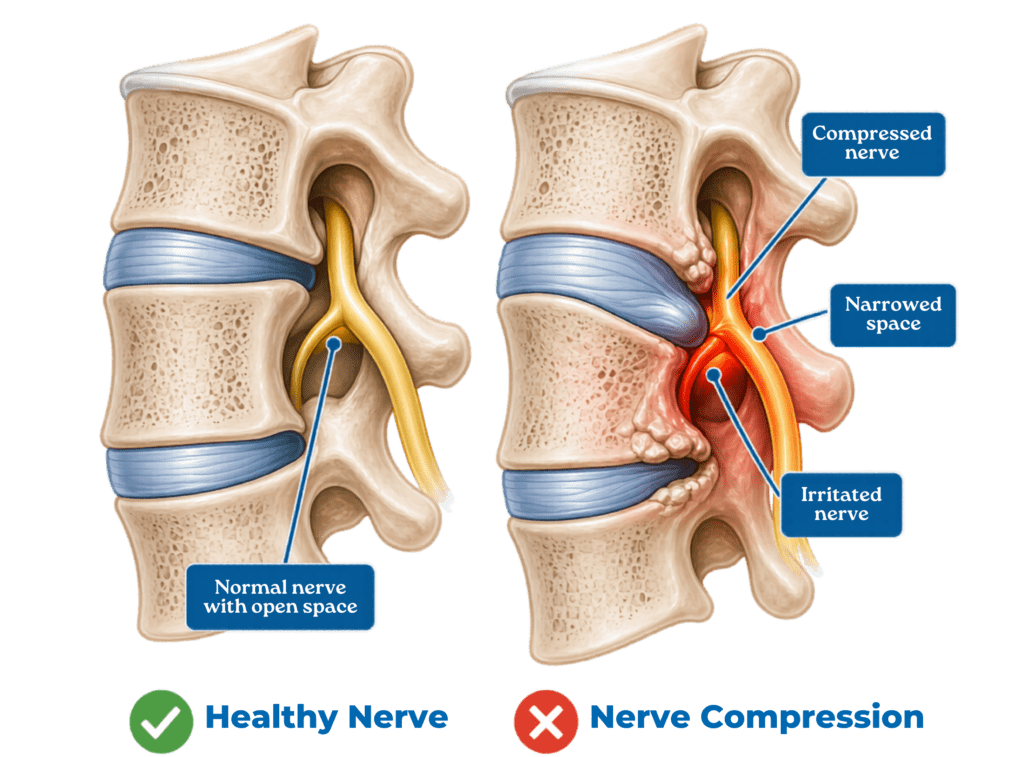
Nerve compression can happen when irritated joints, discs, muscles, bone spurs, or inflammation place pressure on sensitive nerve pathways in the neck.

This pressure can interfere with normal nerve communication and may create pain that stays in the neck or travels into the shoulder, arm, hand, or fingers.

Common causes may include herniated discs, disc degeneration, bone spurs, spinal narrowing, poor posture, muscle tension, or repetitive strain from work, driving, and device use.

Common signs may include:

  • Radiating Arm Pain: Nerve pressure in the neck can cause pain that travels into the shoulder, arm, elbow, wrist, hand, or fingers.
  • Numbness Or Tingling: Compression or irritation can create pins and needles, burning, numbness, or altered sensation along the affected nerve pathway.
  • Weakness Or Grip Changes: If nerve communication is affected, you may notice weakness, heaviness, clumsiness, or reduced grip strength in the arm or hand.
  • Neck Stiffness And Guarding: The surrounding muscles may tighten to protect the area, creating stiffness, reduced range of motion, and discomfort with turning or looking down.
  • Symptoms That Flare With Posture: Long sitting, phone use, computer work, driving, or sleeping awkwardly may increase pressure through the neck and aggravate nerve-related symptoms.
  • A Proper Assessment Matters: At McLeod Street Chiropractic, we assess spinal movement, posture, muscle tension, nerve symptoms, and daily habits to help identify where the compression may be coming from and what care may help.

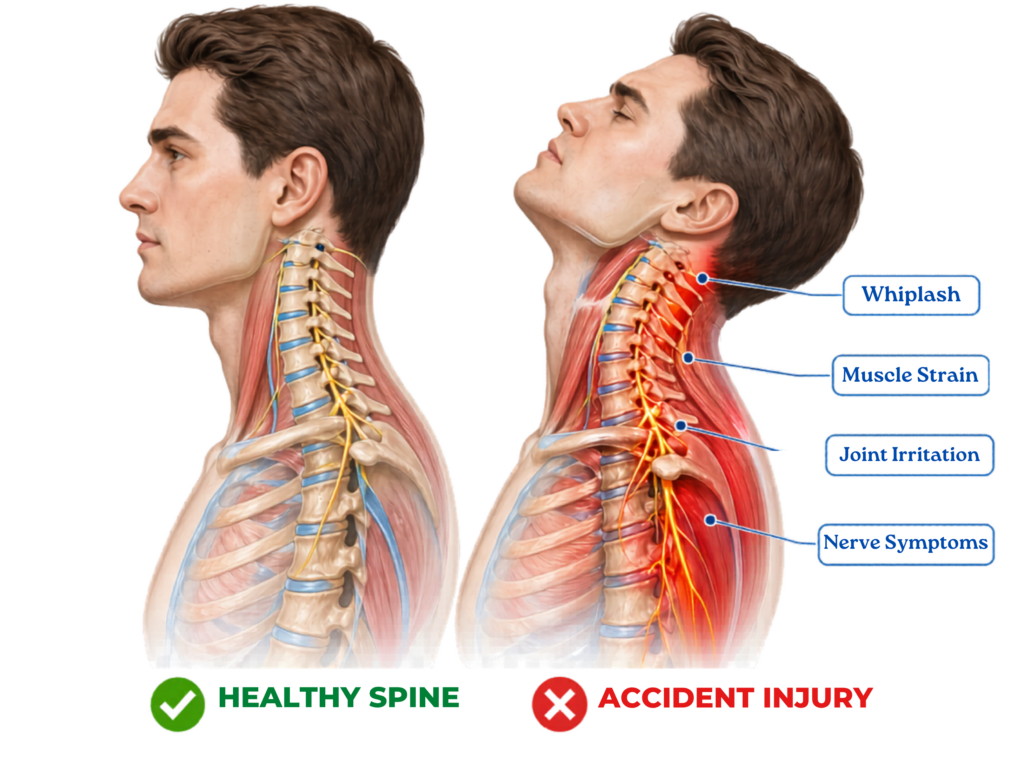
Neck injuries can happen suddenly from auto accidents, sports injuries, falls, whiplash, awkward impacts, or unexpected twists through the upper body.

Whiplash is one of the most common injury-related causes of neck pain. It happens when the head and neck are rapidly forced forward and backward, placing stress on the muscles, ligaments, joints, discs, and nerves.

Pain may appear right away, but it can also build hours or days later as inflammation, muscle guarding, and restricted movement begin to set in.

Common signs may include:

  • Whiplash Symptoms: Stiffness, soreness, reduced range of motion, headaches, upper-back tension, or pain that worsens after an accident or sudden impact.
  • Muscle And Ligament Strain: Sudden force can overstretch or irritate the soft tissues that support the neck, creating pain, tightness, spasms, or guarding.
  • Joint Irritation: Neck joints can become compressed, jammed, or restricted after impact, making it harder to turn, look down, check blind spots, or move comfortably.
  • Nerve Symptoms: If nerves are irritated after an injury, symptoms may travel into the shoulder, arm, hand, or fingers as numbness, tingling, burning, or weakness.
  • Head Pain Or Dizziness: Headaches, dizziness, blurred vision, confusion, nausea, or symptoms after hitting your head should be taken seriously and assessed promptly.
  • A Proper Assessment Matters: At McLeod Street Chiropractic, we assess spinal movement, muscle tension, joint function, nerve symptoms, and injury history to help identify what was affected and what care may support recovery.

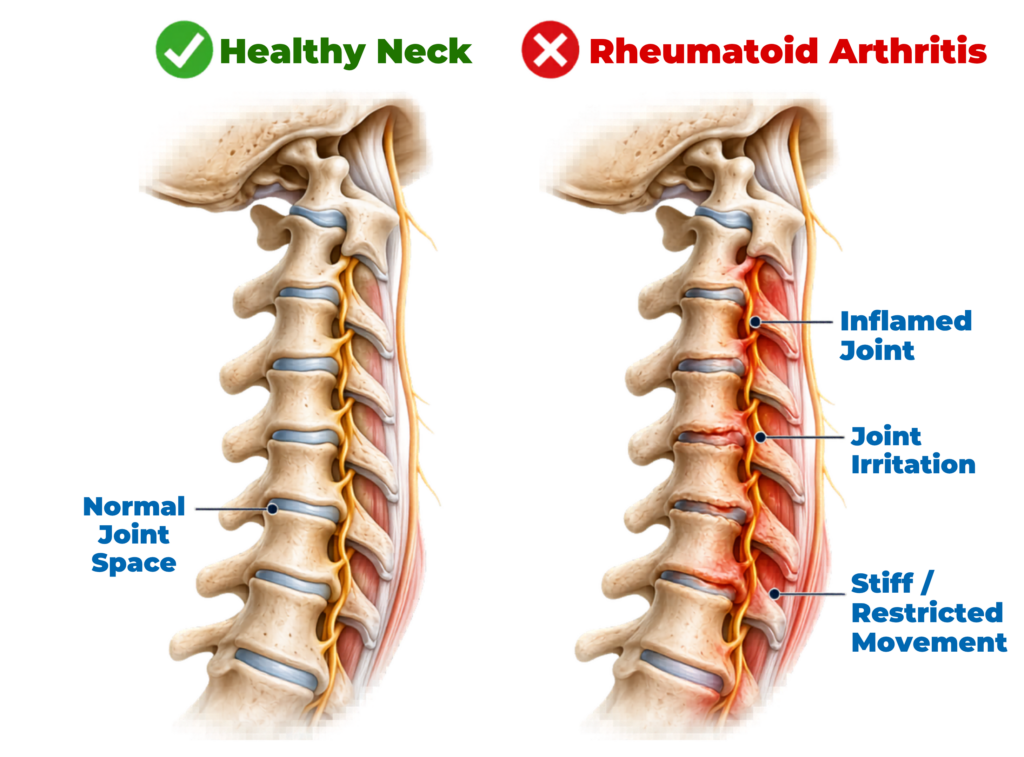
Rheumatoid arthritis is an inflammatory condition that can affect the joints in the neck, contributing to pain, stiffness, reduced mobility, and daily discomfort.

When inflammation affects the joints and surrounding tissues, the neck may feel tight, tender, achy, or harder to move comfortably. Over time, this can place added stress on nearby muscles, posture, and spinal movement.

Chiropractic care may help support better comfort, mobility, and function by working with your body’s movement patterns and helping reduce unnecessary mechanical stress through the neck and upper back.

Common signs may include:

  • Neck Stiffness: Inflammation and joint irritation can make the neck feel stiff, restricted, or harder to move — especially in the morning or after long periods of rest.
  • Aching Or Tenderness: RA-related irritation may create deep aching, soreness, tenderness, or pressure through the neck, shoulders, upper back, or base of the skull.
  • Reduced Range Of Motion: Turning your head, looking up, checking blind spots, or holding your neck in one position may become more uncomfortable when joints are inflamed.
  • Muscle Guarding: When joints are irritated, nearby muscles may tighten to protect the area, creating more tension through the neck, traps, shoulders, and upper back.
  • Headache Or Upper-Back Tension: Neck stiffness and muscle guarding can contribute to tension through the base of the skull, shoulders, and upper spine.
  • A Proper Assessment Matters: At McLeod Street Chiropractic, we assess spinal movement, posture, joint function, muscle tension, and symptom patterns to help support safer, more personalized care alongside your broader healthcare plan.

At Mcleod Street Chiropractic, We Believe YOU Deserve to Be Healthy & Live YOUR Best Life

Neck Pain Risk Factors

Neck pain can happen to anyone — but certain posture, work, lifestyle, and movement habits can make it more likely to show up and keep coming back.

Understanding your risk factors can help you protect your neck, reduce daily strain, improve comfort, and take action before minor irritation turns into a bigger problem.

Poor Posture

Poor posture, like craning the neck forward, can cause chronic neck pain, stiffness, and strain, leading to headaches and long-term spinal issues.

Lifting Improperly

Lifting improperly, especially with poor neck alignment, can strain neck muscles, cause tension, and potentially lead to long-term pain or injury in the cervical spine.

Lack of Exercise

Lack of exercise can weaken neck muscles, leading to poor posture, reduced flexibility, and increased susceptibility to neck pain and tension over time.

Inadequate Diet

An inadequate diet, lacking essential nutrients, can weaken muscles and joints, contributing to poor posture, increased inflammation, and a higher risk of developing chronic neck pain.

Obesity

Obesity places extra strain on the neck and spine, leading to poor posture, muscle imbalances, and increased risk of chronic neck pain and related health issues.

Smoking

Smoking reduces blood flow and oxygen to the spine, impairing healing and increasing the risk of neck pain, disc degeneration, and overall spinal health issues.

Start Feeling Better Today

Get relief. Move easier. Function better. Live with fewer limits.

0 M
North Americans suffer from neck pain yearly
0 %
of people have had neck pain in the past 90 days
0 %
projected increase of people with neck pain by 2050
0 M
Canadians see a chiropractor yearly

When to Take Action for Neck Pain Relief

Dr. B is Greater Sudbury’s top-rated chiropractor. His care provides fast-acting, long-lasting neck pain relief, plus so much more. Don’t wait if your neck pain is severe, persists for several days, radiates, or is accompanied by headaches, numbness, or tingling. Our elite-level evaluation will clarify an accurate diagnosis. See us if you have:

  • Neck pain that’s severe and isn’t improving

  • Neck pain radiating into your arms or down your spine

  • Neck pain paired with headaches, numbness, weakness or tingling

It's Easy To Get Started

Comprehensive Assessment

Start with a thorough new patient exam designed to understand your pain, posture, mobility, health history, and what your body needs to function better.

Personalized Care Plan

Based on your exam and goals, Dr. Brosseau will recommend a care plan focused on relieving pain, improving movement, and helping your body hold results longer.

Gentle Chiropractic Care

Begin care with targeted chiropractic adjustments and supportive therapies designed to restore motion, reduce tension, and support better function.

Move Better. Live Better.

As your body starts moving and functioning better, the goal is simple: less pain, more confidence, and more freedom to enjoy the life you love.

When Neck Pain Is Telling You It’s Time to Get Help

How to Help Prevent Neck Pain

Protect your neck before small strain turns into recurring pain.

Tip 1: Perfect Your Posture

Better posture can reduce daily strain on your neck and help prevent small tension from turning into recurring pain.

Start with these simple posture habits:

  • Avoid Slouching: Keep your head stacked over your shoulders instead of drifting forward, especially while sitting, working, or using devices.
  • Support Long Standing: When standing for longer periods, rest one foot on a low stool and alternate sides to reduce strain through your lower back, shoulders, and neck.
  • Sit With Better Alignment: Keep your feet flat, knees bent comfortably, shoulders relaxed, and your spine supported.
  • Raise Your Screen: Bring your phone, tablet, or monitor closer to eye level so your neck is not constantly bending downward.

A better workspace setup can reduce neck strain before it builds into stiffness, tension, or recurring pain.

Start by adjusting the areas you use most:

  • Raise Your Monitor: Keep your screen at eye level so you’re not constantly tilting your head forward or looking down.
  • Adjust Your Chair: Use a chair that supports your back and lets your shoulders stay relaxed instead of shrugged, rounded, or tense.
  • Set Up Your Desk Smarter: Keep the items you use most within easy reach so you’re not constantly twisting, stretching, or straining your neck and shoulders.

Regular movement breaks can help reduce neck tension before it builds into stiffness, headaches, or end-of-day pain.

Give your neck and shoulders a reset throughout the day:

  • Take Scheduled Breaks: Stand up, move around, and reset your posture every 30 minutes during long work sessions, screen time, or travel.
  • Use Active Rest: Try gentle neck stretches, shoulder rolls, or slow posture resets to help loosen tight muscles and reduce built-up tension.
  • Change Positions Often: Alternate between sitting, standing, and short walks so your neck is not locked into the same position for too long.

How you lift and carry matters — especially when your neck and shoulders are already under stress.
Protect your neck by keeping loads controlled, balanced, and close to your body:

  • Lift With Your Legs: Bend through your knees and hips, keep your spine steady, and avoid twisting while lifting or setting something down.
  • Balance the Weight: Carry bags, backpacks, and loads evenly so one side of your neck and shoulders is not forced to work harder than the other.
  • Lighten the Load: Reduce what you carry when possible, or make multiple lighter trips instead of forcing your body through one heavy strain.

Smoking can make it harder for spinal tissues, discs, and joints to stay healthy — which may contribute to more pain, slower healing, and recurring neck issues.

Taking steps to quit can support your overall health and your body’s ability to recover:

  • Get Support to Quit: Speak with a healthcare provider about smoking cessation options, including counseling, medication, or nicotine replacement therapy.
  • Build a Support System: Support groups, accountability, and practical guidance can make it easier to stay consistent and work through cravings.

Better sleep posture can help your neck relax, recover, and avoid waking up stiff, sore, or restricted.

Set your neck up for better rest and recovery:

  • Choose the Right Pillow: Use a pillow that supports the natural curve of your neck without pushing your head too far forward or letting it drop too low.
  • Improve Your Sleep Position: Try to sleep in a position that keeps your spine more naturally aligned, and avoid stomach sleeping when possible because it can twist and strain your neck.
  • Check Your Mattress Support: Make sure your mattress supports your spine properly. A mattress that is too soft, too worn, or unsupportive can add stress to your neck and back.

Gain Your Elite Advantage

Actionable Tips And Insights For Winning Your Day